

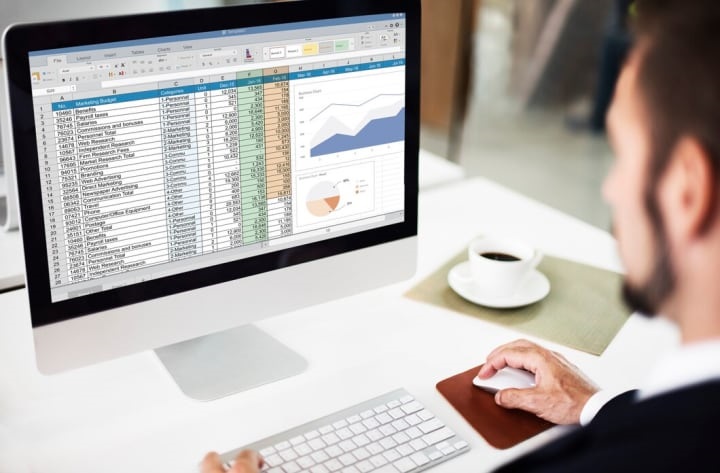
As a small business transitions into a scaling enterprise, its operational complexity multiplies exponentially. In the early stages, basic spreadsheets or entry-level desktop bookkeeping applications are often sufficient to track income and expenses. However, as transaction volumes surge, regulatory compliance tightens, and multi-channel revenue streams emerge, these legacy methodologies quickly reveal severe operational bottlenecks.
For growing business organizations, manual data entry and disjointed financial processes represent a significant vulnerability. Smart accounting solutions—modern, cloud-based financial management platforms integrated with automated workflows and advanced reporting frameworks—have transformed from a luxury into a functional necessity. Adopting automated financial architecture allows expanding businesses to maintain financial clarity, reduce overhead, and make agile strategic decisions based on real-time business data.
The Operational Pressures of Enterprise Growth
Scaling a business introduces unique financial challenges that manual tracking or basic bookkeeping systems simply cannot sustain without a proportional increase in administrative headcount.
-
Data Fragmentation: When data fragments across independent platforms, such as an e-commerce platform, a separate inventory system, and an offline storefront, the internal finance team must manually reconcile information. This process is time-consuming and highly prone to human error.
-
Regulatory Compliance Complexity: Expanding sales into different states or countries introduces distinct tax jurisdictions, varied compliance standards, and complex corporate reporting mandates.
-
Cash Flow Mismanagement: Rapid growth often requires massive upfront capital investments in inventory, hiring, and marketing. Without real-time visibility into accurate cash flow, a profitable organization can easily experience severe liquidity shortages.
Smart financial systems actively mitigate these growth-related pains by creating a centralized database that coordinates information across every department in real time.
Automated Reconciliation and Real-Time Ledger Updates
The core advantage of smart accounting solutions lies in their ability to automate repetitive, low-value administrative tasks. Manual data entry is slow and introduces a high risk of operational errors, which can distort financial projections.
Modern platforms connect directly to corporate bank accounts, payment processing gateways, and credit lines. Automated feeds pull transactional records into the ledger instantly, where machine learning models automatically categorize entries based on historical patterns and customizable matching rules.
Instead of devoting days at the end of the month to manual ledger reconciliation, accounting teams shift their focus to managing exceptions. The system automatically matches invoices with incoming bank transfers, flags duplicate expenses, and alerts management to internal discrepancies. This shifts the accounting department from a historic record-keeping function to a proactive, forward-looking operational unit.
Cloud Infrastructure and Multi-Entity Global Expansion
For a modern business, growth rarely stays confined to a single geographic area. E-commerce platforms, remote working models, and international supplier agreements mean corporations often operate across multiple states, borders, and operational currencies.
Real-Time Global Accessibility
Cloud-based financial systems eliminate the constraints of localized software licenses. Authorized stakeholders can securely review financial health, approve vendor disbursements, and track account receivables from any device with an active internet connection. This baseline accessibility ensures that corporate decision-making remains fast, regardless of physical location.
Dynamic Currency Conversion and Tax Consolidation
Operating in multiple currencies introduces severe manual calculation overhead if teams have to manually calculate exchange rates at the close of every business day. Smart platforms handle currency conversions automatically at the point of transaction, pulling real-time exchange rates to maintain balanced general ledgers.
Furthermore, if an expanding organization opens subsidiary units, modern accounting suites allow for seamless multi-entity consolidation. Executives can instantly view the performance of an individual storefront, branch, or subsidiary, or consolidate everything into a single master financial view with a click.
Precision Cash Flow Forecasting and Operational Intelligence
Surviving growth phases requires deep strategic foresight rather than relying entirely on trailing quarterly metrics. Smart accounting software moves past basic data collection by incorporating predictive data models to project financial trajectories.
By evaluating historical payment cycles, seasonal sales trends, and macroeconomic indicators, these intelligent solutions generate reliable cash flow forecasts. This insight helps executives determine the optimal timing for significant corporate expenditures, capital allocations, or debt repayments.
Additionally, custom tracking tools allow businesses to assign unique operational tags to individual projects, departments, or marketing campaigns. This structural granularity exposes exactly which divisions generate the healthiest margins and which consume cash disproportionately, giving leaders the precision data required to allocate corporate capital effectively.
Enhancing Cybersecurity and Mitigating Fraud Risks
As an organization grows, its expanding profile makes it a target for external cyber threats and internal financial irregularities. Spreadsheets and legacy localized systems lack the robust security measures required to protect sensitive corporate assets.
Smart platforms provide enterprise-grade security protocols, including end-to-end data encryption, multi-factor user authentication, and routine automated system backups. More importantly, these applications enable granular, role-based user permissions. A business owner can grant a shipping clerk visibility into accounts receivable or inventory valuation while completely blocking access to the corporate bank connections or executive payroll registries.
To protect against internal asset diversion, these systems maintain unalterable digital audit trails. Every modification, entry creation, invoice deletion, or payment approval is logged permanently with a non-editable timestamp and user identification record, ensuring total organizational transparency.
Seamless Integration Across the Software Ecosystem
Accounting software should never operate as an isolated silo. Modern solutions use robust application programming interfaces to establish reliable data pipelines across the entire corporate software suite.
Connecting accounting systems to customer relationship management tools, human resource platforms, inventory databases, and point-of-sale hardware yields massive efficiency gains. For instance, when a sales representative marks a deal as won inside the CRM, the integrated accounting software instantly generates a corresponding invoice, updates inventory balances, and adjusts the revenue ledger. This eliminates cross-departmental communication barriers and aligns the organization around a single source of financial truth.
Frequently Asked Questions
What is the primary difference between entry-level small business accounting applications and smart mid-market enterprise platforms?
Entry-level software functions primarily as a digital record keeper for simple historical income and expense transactions. Smart enterprise accounting solutions use automation to handle multi-currency conversions, coordinate multi-entity financial roll-ups, integrate cleanly with other core software suites via APIs, and provide predictive business intelligence rather than just backward-looking statements.
How does automated accounting software help a business prepare for an official corporate financial audit?
Smart platforms significantly streamline the audit process by building permanent, unalterable digital audit trails for every transaction. Auditors can trace an entry from the final financial statement directly back to the original digital receipt, bank authorization, and employee approval record within seconds, minimizing operational disruption and shortening overall audit timelines.
Can automated platforms calculate complex state and local sales taxes across multiple jurisdictions?
Yes, modern financial applications integrate directly with specialized geometric tax databases. When a transaction occurs, the software calculates and applies the exact state, county, and local sales taxes based on the buyer’s physical address, tracking liabilities across thousands of unique tax jurisdictions automatically to ensure absolute compliance.
How long does it typically take for a growing business to transition from legacy accounting software to a cloud-based smart solution?
The transition timeline depends heavily on data volume and operational complexity. A straightforward migration can take anywhere from a few weeks to a couple of months. The process involves mapping out custom ledger codes, cleaning up historic transaction records, connecting external banking APIs, and running parallel testing sequences to ensure data integrity remains intact throughout the transition.
Does transitioning to automated accounting solutions eliminate the need for certified public accountants?
No, it shifts their role. Automation takes over repetitive administrative tasks like manual data entry and transaction pairing, freeing up professional accountants from routine paperwork. This allows certified public accountants to act as strategic advisors who interpret the software’s analytical outputs, optimize tax structures, and guide high-level corporate growth plans.
How do smart accounting systems manage and process employee expense claims?
Employees can snap pictures of physical expense receipts using integrated mobile applications. The software uses optical character recognition to extract vendor names, transaction dates, and totals automatically, matching the receipt to corporate credit card statements and routing the claim directly to designated managers for approval according to pre-set corporate policies.
What happens to historical financial data when a company migrates to a new smart platform?
During migration, historical financial records are extracted from the old database, cleaned of formatting anomalies, and mapped directly into the new architecture. Businesses typically choose to import several years of historical monthly balances to maintain continuity in year-over-year reporting, while archiving the older raw transaction files in a secure storage format for regulatory compliance.