

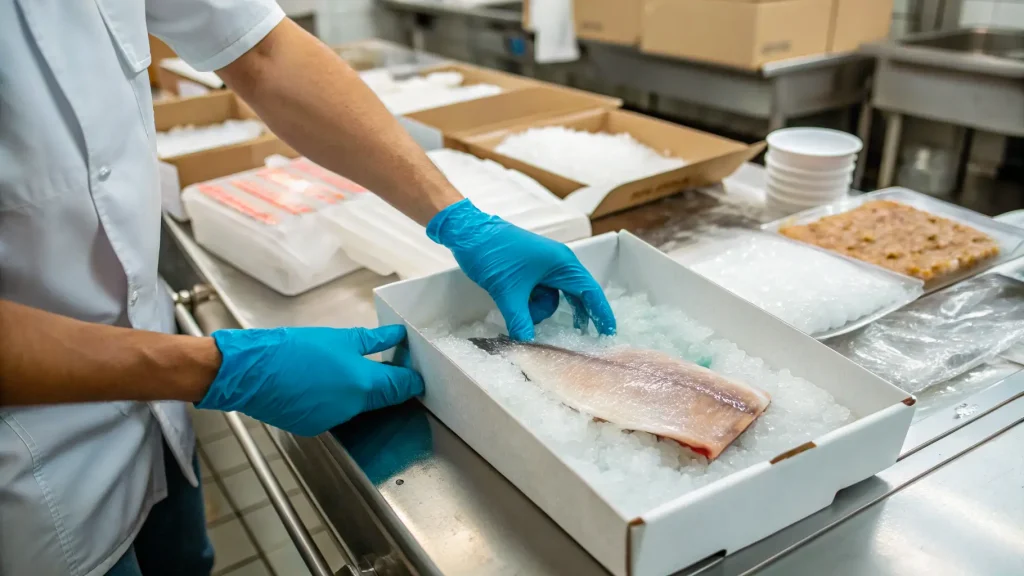
Seafood spoils faster than almost any other food. Within hours of leaving the water, quality starts to drop unless temperature control kicks in right away. The cold chain is the system that holds quality steady from the boat to your plate. A reliable frozen shrimp manufacturer depends on this chain working without a single weak link.
Thailand stands among the world’s largest seafood exporters, with shrimp, tuna, and squid moving to markets across Asia, Europe, and North America. That scale rests on strict temperature management at every stage. When a frozen shrimp manufacturer in Thailand processes a catch, the goal is simple: lock in freshness before bacteria and enzymes can act.
Get the cold chain right, and seafood reaches the shelf tasting close to the day it was caught. Get it wrong, and texture, flavor, and safety all suffer. Here is how the process holds quality from sea to shelf.
The Cold Chain Explained
The cold chain is an unbroken run of temperature control. It starts on the fishing vessel, continues through processing and storage, and ends at the retailer or buyer.
Each handoff is a risk point. A few degrees of warming during transfer can shorten shelf life and invite bacterial growth. For this reason, processors monitor temperature at every step and record the data for traceability.
The takeaway: quality is not set at one moment. It is protected across the entire route.
Freezing Methods That Matter
Not all freezing works the same way. The speed of freezing shapes the final texture.
- Blast freezing. Cold air at high speed drops the temperature fast, forming small ice crystals that protect cell structure.
- Plate freezing. Flat surfaces press against the product for even, rapid cooling, common for fillets and blocks.
- Individual quick freezing (IQF). Each piece freezes separately, which suits shrimp and small portions and prevents clumping.
Slow freezing creates large ice crystals that pierce cell walls. The result is mushy texture and lost moisture once thawed. Fast freezing keeps the flesh firm and close to fresh.
Chilled Seafood and Its Limits
Chilled seafood stays just above freezing, usually between 0 and 4 degrees Celsius. This keeps the product fresh for short periods without the texture changes that freezing can bring.
The trade-off is shelf life. Chilled products last days, not months, so they suit local markets and fast supply lines. Exporters often choose freezing for long-distance shipping and chilling for nearby buyers.
Thailand’s Role in Global Seafood
Thailand built its export strength on processing capacity, port access, and skilled labor. Plants run modern freezing lines and follow food safety standards such as HACCP and GMP.
Strict cold chain control lets Thai exporters meet the rules of demanding markets like the EU and Japan. Traceability systems track each batch from catch to container, which protects both quality and trust.
Quality seafood depends on temperature, speed, and discipline at every stage. Fast freezing locks in texture, steady chilling serves short routes, and an unbroken cold chain ties it all together. When sourcing, confirm freezing methods, check certifications, and ask for temperature records before you commit.